
As more homeowners in Singapore rebuild or extend their landed properties, one question comes up frequently:
“Should I install a home lift?”
Whether it’s for aging parents, resale value, or future-proofing your home, a private lift offers many advantages — but it also comes with costs and compliance considerations.
This guide will help you weigh the pros, cons, and types of residential lifts, including practical examples from Singapore’s context.
Benefits of Installing a Home Lift
1. Future-Proof Accessibility
As we age, staircases become a challenge. A home lift:
Enables barrier-free access across all levels
Supports multi-generational living
Makes it easier to move wheelchairs, strollers, groceries, or furniture
2. Adds Property Value
In today’s landed home market:
Buyers are increasingly prioritising accessibility
Premium homes (3-storey or with attic) expect lifts
A lift can add 5–10% to resale value, especially in districts popular with retirees or overseas buyers
3. Daily Convenience
Even without mobility issues:
Reduce trips up/downstairs
Easier for domestic helpers or deliveries
Helpful during injury recovery or pregnancy
4. Compact, Space-Efficient Options
New technology allows for lifts with:
No machine room
Minimal pit and headroom
Shaftless or self-contained models
Drawbacks & Practical Challenges
1. Installation Cost
Estimated supply + install costs:
Basic 3-stop lift: $40,000–$80,000 depending on brand and type
Shaft construction: $30,000–$80,000 depending on material
2. Ongoing Maintenance
Annual servicing required under BCA guidelines
$1,000–$2,000/year typical maintenance contract
Spare parts may need to be imported, depending on brand
3. Retrofitting Is Disruptive
Adding a lift to an existing home can involve:
Hacking slabs or staircase areas
Strengthening beams or foundations
External hoistway structures (which may affect GFA)
4. Regulatory Compliance
BCA approval for structural works
SCDF regulations if fire-rated shaft is needed
Proper electrical loading (some lifts need 3-phase power)
Types of Home Lifts Available in Singapore
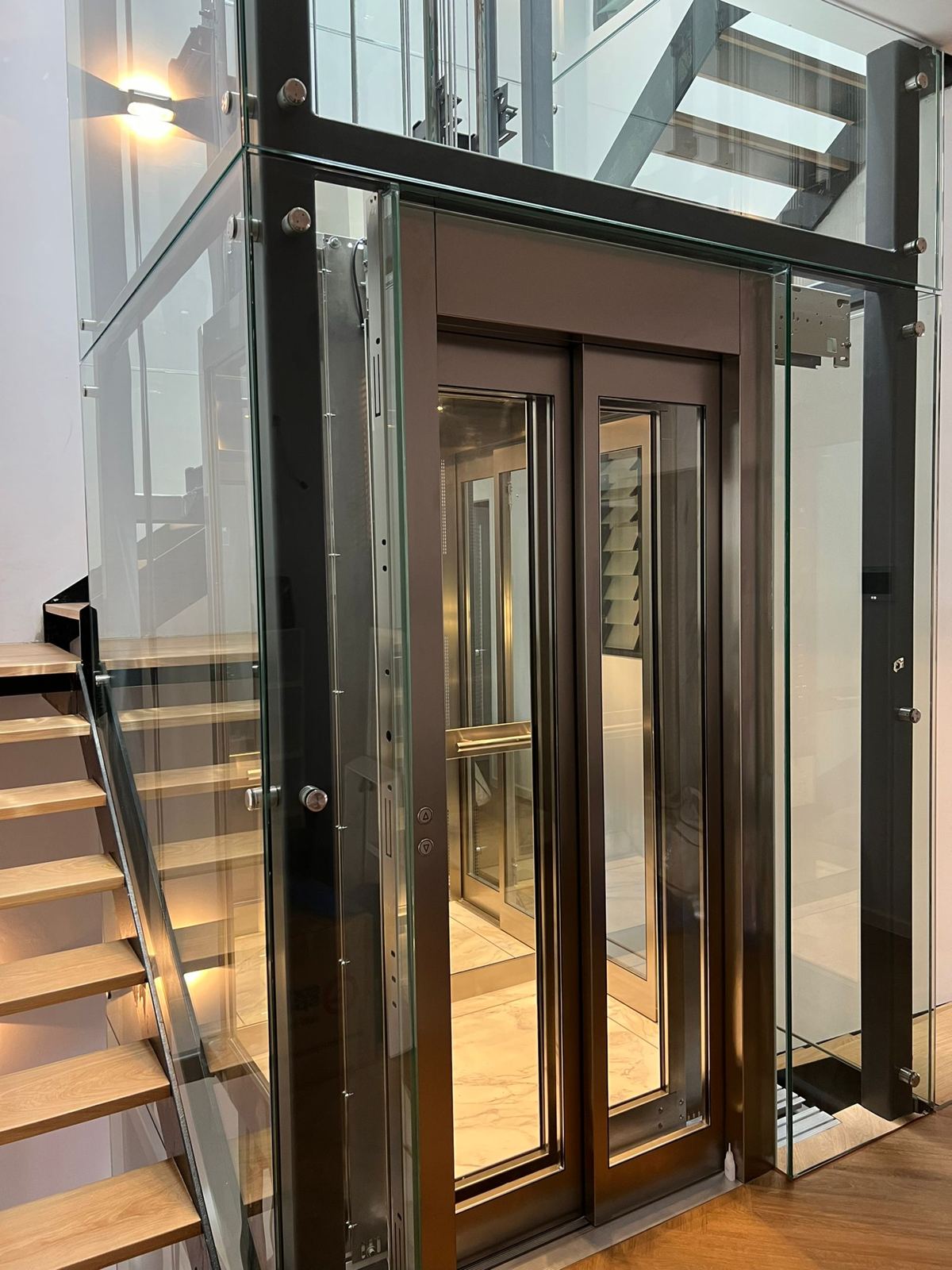
Here’s a breakdown of the 4 common residential lift types you’ll encounter:
Type | Mechanism | Pros | Cons | Suitable For |
Hydraulic | Uses fluid pressure with piston | Smooth ride, relatively quiet | Needs pit + machine room; more maintenance | New builds with space for shaft |
Traction (MRL) | Steel cable & motor (machine room-less) | Energy efficient, common in condos | Higher cost than hydraulic | Homes with shaft space but no room for machine box |
Vacuum / Pneumatic | Air pressure within vertical tube | No shaft needed, compact | Low capacity (~2 persons), max 3–4 stops | Tight space or retrofits |
Screw/Nut Drive (HomeLift models) | Rotating screw shaft + carriage | Quiet, simple mechanics | Slightly slower; not ideal for frequent use | Cost-conscious homeowners or part-time use |
When Should You Install a Home Lift?
Scenario | Recommendation |
Rebuilding or major A&A | Plan lift from start — more affordable |
3-storey layout with elderly or resale target | Strongly recommended |
Already built home | Feasible but expect disruption and higher cost |
2-storey home with long-term vision | Optional but great for future-proofing |
Final Tips Before Installation
Choose minimum 250kg load for 2 pax + wheelchair
Plan shaft near stairwell
Request local support and spare parts guarantee
Always engage a builder and lift supplier early in design phase
Planning a landed rebuild?
Talk to a BCA Grade GB1 builder who designs, submits and builds in-house. Free 60-minute site assessment, no obligation.